A beachfront chalet on the Côte-Nord, feet in the sand
"Waterfront" can mean many things. Here it means a staircase, then kilometres of sand.
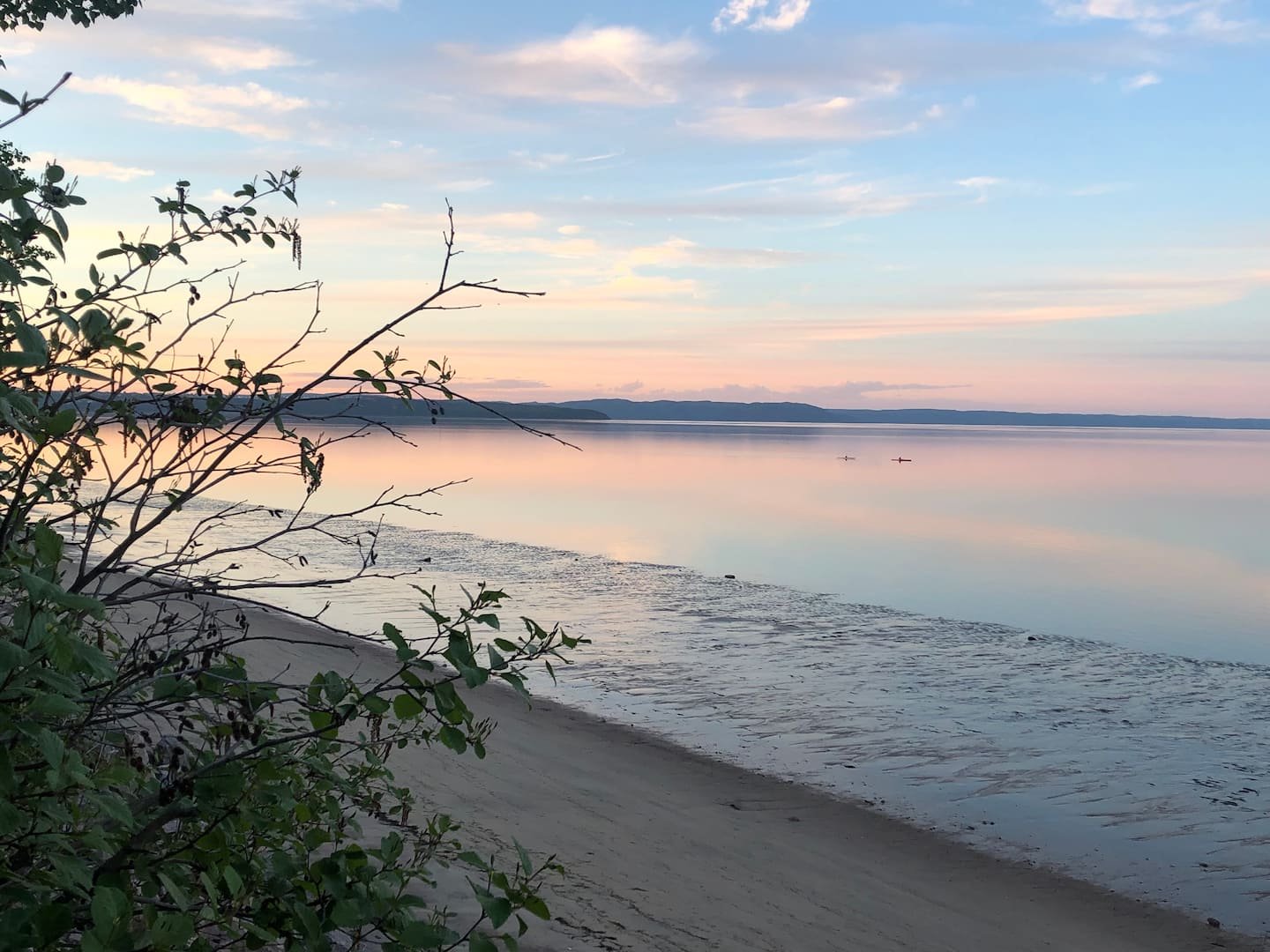
The Manicouagan peninsula, across from Baie-Comeau, is one of the great stretches of sand on the Côte-Nord: about thirty kilometres of sand, shared between Ragueneau, Chute-aux-Outardes, Pointe-aux-Outardes and Pointe-Lebel.
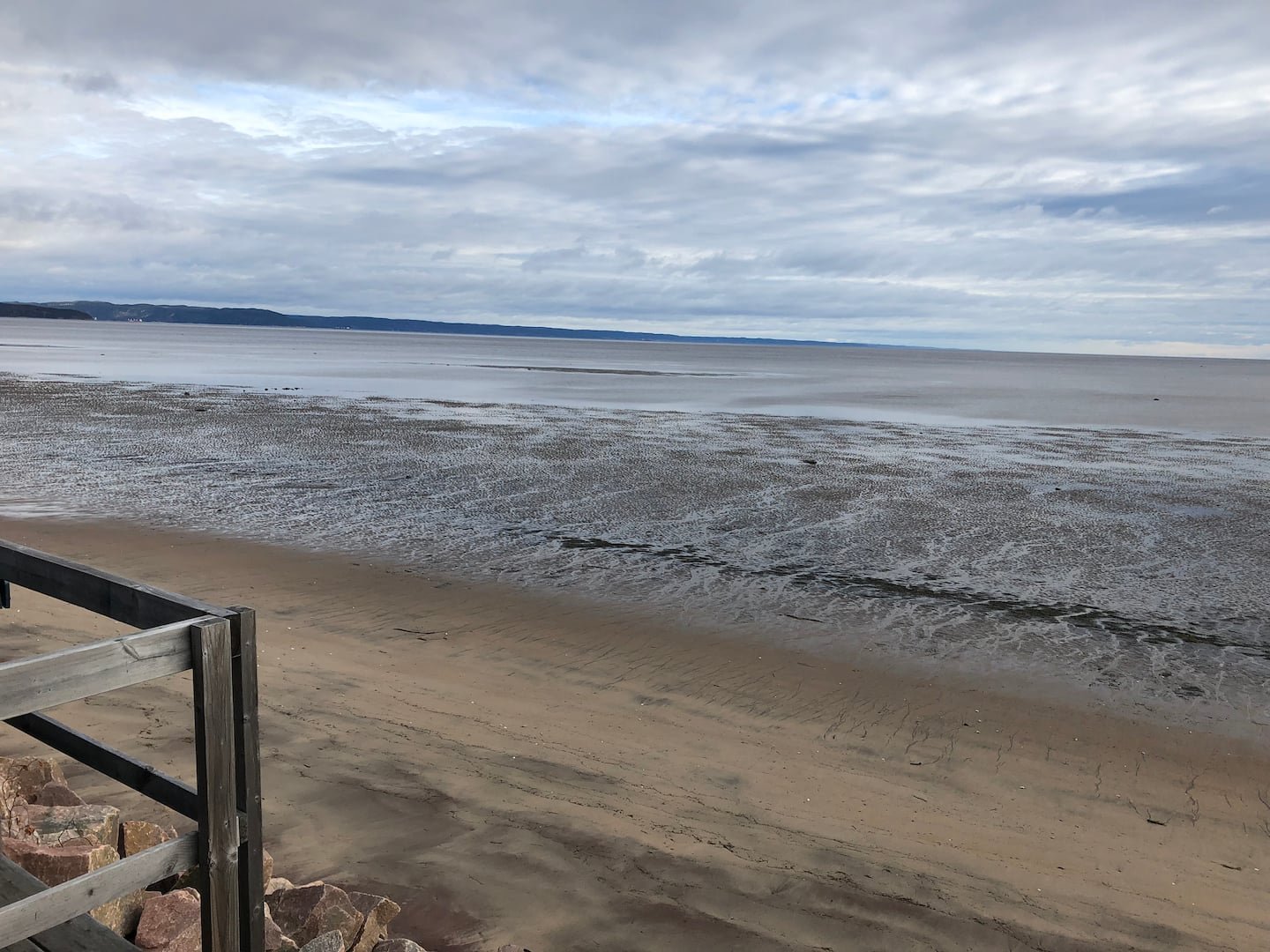
The chalet is on that beach. Not across from it, not a few minutes away: the staircase leaves the yard and goes straight down to the sand.
Where Pointe-Lebel is
Pointe-Lebel covers part of the peninsula formed between the mouths of the Outardes and Manicouagan rivers, right across from Baie-Comeau. It is a village of about 1,800 people.
At this point the St. Lawrence no longer looks like a river: the south shore is so far away that the ferry to Matane takes more than two hours to reach it. Locals call it the sea, and nobody corrects them.
A beach that changes twice a day
The tide decides everything. At high tide the water reaches the foot of the stairs. Six hours later the sand stretches for hundreds of metres and you walk until the chalet is a dot behind you. The difference between the highest and lowest water is more than three metres.
We wrote a whole article on it, with the gauging stations and safety tips: The tides at Pointe-Lebel, in the journal.
What "beachfront" means here
- Morning coffee on the deck, with the river as your only neighbour.
- An outdoor fire pit and a picnic table facing the sunset.
- Large windows in the living and dining rooms, on the water side.
- The sand, the dunes and the rocks at the bottom of the steps, open at all times.
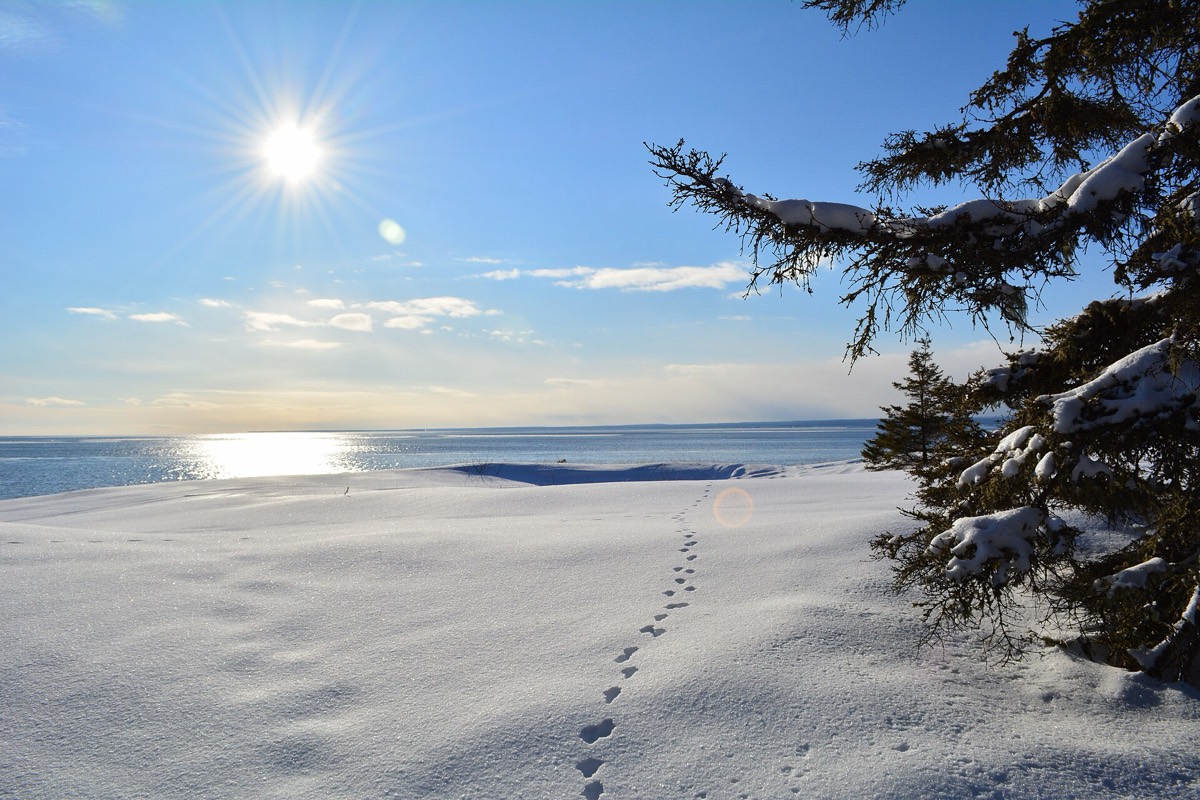
- A chalet heated all year: the sea in February is a show too.
Swimming, or not
To be honest, the St. Lawrence stays cold, even in August. The brave dip in; most people wade to the knees. What really warms up are the pools that low tide leaves on the flats. Children spend whole afternoons in them.
What people come for is less the swimming than the space: long walks, collecting shells, watching shorebirds work the mud, lighting a fire as the sun goes down.
Around the beach
About twenty kilometres away, the Parc Nature de Pointe-aux-Outardes protects a salt marsh, dunes and boardwalk trails. More than two hundred bird species have been recorded there, making it one of the best birding sites in Quebec. Our article on the birds of Pointe-aux-Outardes gives the best times to go.
For whales, drive about two and a half hours to Les Escoumins or Tadoussac, where the cruises leave. It is a long day, and often the one guests talk about most afterwards.
When to come
June to August for long evenings and the warmest water, booking early. September and October for the light and the quiet. Winter for the ice piling up on the shore and the fire lit. The chalet is open twelve months a year.
Sources
Checked on 6 September 2026. If you find an error, write to us and it will be corrected.